COLD WAR: CIA vs. KGB
OMG Endurance Event #005
April 11, 2026 | 3:00 PM
"Betrayal doesn’t come from enemies—it comes from those who sat beside you." – Alec Trevelyan
COLD WAR: CIA vs. KGB
Event Details
"A good spy speaks only when silence would be louder." – MI5 Instructor
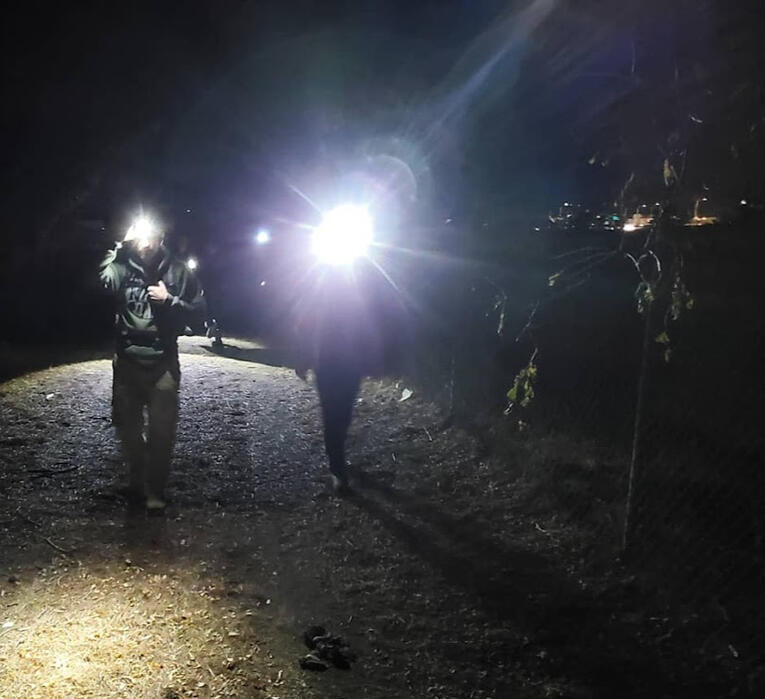
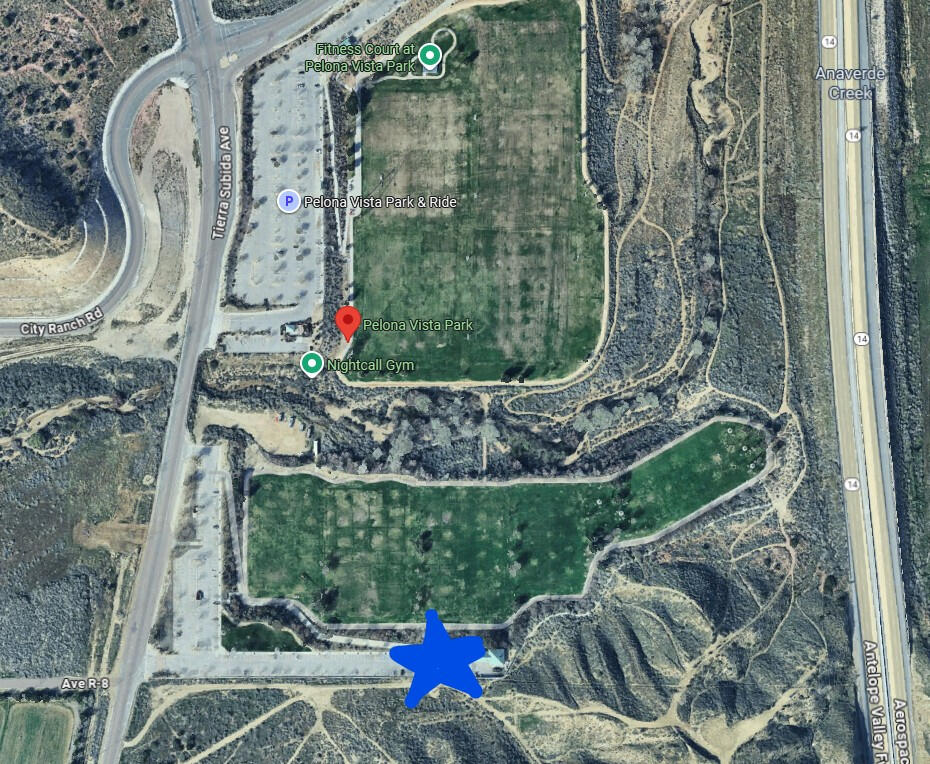
This will be a fun endurance event filled with mental and physical challenges that can be scaled to match your abilities. Event length will be around 6 hours. Expect a bit of running, carrying stuff, and and a whole lot of fun and games. For the overachievers among you, options will be available for extra work and mileage (with greater rewards).We're switching it up this time and there will be no teamwork portion of the event. It's every spy for himself or herself.Meet near the Restroom on the South field at 37720 Tierra Subida Ave, Palmdale, CA 93551 no later than 3:00 PM with all of your gear and your signed Liability Waiver in-hand.
Gear List (Tentative - Will be updated as we get closer to the event)
"The most painful wounds aren’t from bullets—they’re from broken trust." – Anna Chapman
Signed Liability Waiver
Water and nutrition to sustain you for 6 hours (you may leave these items at our homebase and access them as needed)
Clothing appropriate for the weather
Writing instrument and a small notebook
Timepiece (Watch, Phone, etc.)
Headlamp or flashlight (it will be dark for the last hour of the event and at least one challenge will be in an area without light from the park)
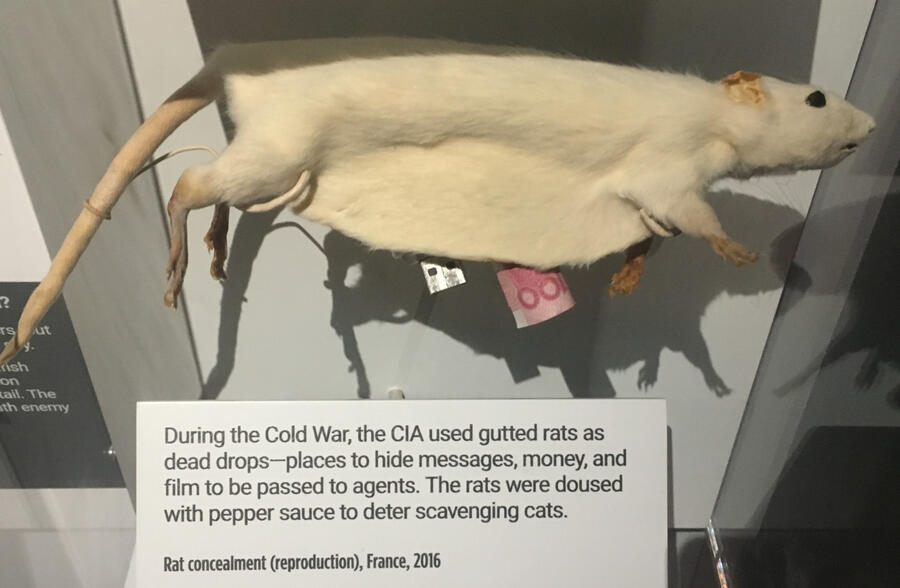
A homemade concealment for dead drops. More info here (optional, but participants may earn a significant advantage)
Backpack/hydration vest (optional)
Gloves (optional)
Prizes
All finishers will receive a custom patch made for this event.
COLD WAR: CIA vs. KGB
Registration
"The most dangerous person in the room is the one you’ve known for years." – Counterintelligence Agent
Register using the button, below. Accepts PayPal, Venmo, or Credit Card. Reach me via the Contact page or DM for alternative payment options. $40.


COLD WAR: CIA vs. KGB
First Timer Info
"In intelligence, the smallest detail can topple empires." – Reinhard Gehlen, Nazi & CIA Intel
The most important thing to know is that you will be fine. Hundreds of people have completed prior events and none have dropped out. 100% Finisher Rate.If any kind of fitness regimen is part of your life then you will finish the event. There may be a few challenging moments for you along the way but that will all be forgotten when the event is over. You will have fun.Events like this one typically begin at a park where we do a group warmup and some group games and/or physical challenges. After a time, everyone heads up into the trails where the individual challenges begin. Some past challenges (see slideshow, below) have included:
Completing a word search while holding a plank
Completing a puzzle hiding a secret message
Carrying a heavy bucket to a distant location
Climbing a hill (while keeping a mouthful of water)
Putting together a small lego model
Solving riddles
Team carry of a tractor tire
The event scales to match your abilities. There will be many options to challenge yourself throughout the evening. While we do hope you will push your limits and test yourself, you are not required to complete all of the challenges. Just do you best and all will be fine.
COLD WAR: CIA vs. KGB
Dead Drops and Concealments
"In the shadows, the true war was fought!" – Frederick J. Nash
Participants that bring a homemade concealment will earn an advantage during the event.
A dead drop is a method of espionage tradecraft used to pass items or information between a case officer and an asset via a secret location. By avoiding direct meetings, individuals can maintain operational security.Spies and their handlers have been known to perform dead drops using various techniques to hide items and to signal that the drop has been made. Although the signal and location by necessity must be agreed upon in advance, the signal may or may not be located close to the dead drop itself. For example, a chalk mark on a mailbox near the asset's home may trigger a meeting the following day at a park across town.Methods
The success of a dead drop depends on the location and method of concealment, ensuring retrieval without the operatives being spotted by the public, law enforcement, or other security forces. Common everyday items and behaviors are used to avoid suspicion. Any hidden location is used.A well-designed concealment device will be be inconspicuous when placed. It will not attract attention. It often appears to be dirty to discourage others from touching it. Some historical examples include a taxidermy rat, a smashed milk carton or cigarette case, a hollowed-out bolt.Various signaling methods are employed to indicate that a dead drop has been made. These include chalk marks on a wall, a piece of chewing gum on a lamppost or a newspaper placed on a park bench. In some cases, signals are made from an agent's residence, visible from the outside, such as distinctively coloured towel hung from a balcony or a potted plant positioned on a windowsill.

COLD WAR: CIA vs. KGB
The Rules
Overview: You are a CIA agent secretly operating out of the U.S. Embassy in Moscow. You'll perform exercises at the embassy to earn skill cards (e.g. Disguise, Cryptology, etc.) and then you'll go to locations on the map to perform operations that require those skills. Among the CIA agents are some randomly selected participants who are secretly working for the KGB and have infiltrated the CIA. They will be doing their best to thwart your operations while also hiding their true allegiance.
1. At the event, participants will be randomly assigned as either CIA agents or as KGB officers who've infiltrated the CIA (double-agents!). Participants may not show the card with their true allegiance to any other participants at any time.2. Participants will look at the map and examine the list of available operations. Operations will have a name and unique identifying number, a time period during which they are available, a list of required skills necessary to complete the mission, and the minimum number of people that must go on the Operation.3. After selecting an Operation to go on, participants will find others to temporarily team with, and go on the Operation together.4. Participants will earn skill cards at the U.S. Embassy (aka Homebase) necessary to complete each Operation.5. After earning the skill cards necessary to complete the Operation, the temporary teammates will visit to the Volunteer closest to the Operation location from the map.6. The temporary teammates will tell the volunteer which Operation they are attempting to complete and will then hand to the volunteer the skill cards required to complete the Operation. Each participant must contribute at least one card. Only the skill cards listed for this Operation will be accepted. (e.g. If the Operation requires at minimum of two people and the skills, Disguise and Cryptography, and you bring 3 people, the extra person can contribute a second Disguise card or a second Cryptography card.)7. The volunteer will ask the team to step back and will call each team member up individually. Each team member will secretly indicate to the volunteer whether they wish for the mission to succeed or fail. CIA officers MUST ALWAYS indicate to the volunteer that they want the Operation to succeed. Participants secretly loyal to the KGB, MAY CHOOSE TO FAIL THE OPERATION OR MAY ALLOW IT TO SUCCEED.8. The Operation is SUCCESSFUL if ALL of the participants indicated to the volunteer that they want the Operation to succeed.9. The Operation FAILS if ONE OR MORE of the participants is secretly a KGB double-agent and indicated to the volunteer that they want the operation to fail.10. If the Operation is successful, the Volunteer will record the success in each participant's Operations Guide.11. If an Operation is unsuccessful, participants may attempt it again with the same or different participants. All participants on subsequent attempts must still meet all of the same requirements (skill cards, minimum number of participants, etc). (TIP: It will be to your benefit to earn some extra cards at the Embassy in order to allow for extra attempts without having to run all the way back to the Embassy to earn more cards!)12. Participants may re-attempt Operations as many times as they wish, but will only receive credit for completing the Operation once. (Example: Tim completes Operation #2 and is heading back to the Embassy but sees another group fail at Operation #2. They have the cards to make another attempt but want to swap out one of their members who the group is suspicious of. They ask Tim to join them. Tim has an extra card that will fit the Operation's requirements and joins them in their second attempt. The second attempt succeeds and the volunteer records the success in each participant's Operations Guide. Tim, however, already received credit for Operation #2 and receives no further benefit. )13. After a successful Operation, participants MUST RETURN TO THE EMBASSY before attempting any NEW OPERATION. (Players may redo Operations they've already completed (See #11, above) without first having to return to the Embassy. Only attempts at NEW OPERATIONS are prohibited until the participant first returns to the Embassy.)14. Participants MAY NOT SHOW THEIR LOYALTY CARDS (the CIA and KGB cards distributed randomly at the start of the event) to any other participant at any time. Firstly, it's cheating. Secondly, you're ruining the fun for yourself and for others. If that's not enough, know that I have ways of finding out and have already planned a way to make you pay it you cheat. You'll regret your choice.)15. Be Inclusive. While you may start to build a little group of people you trust and who are successfully completing a lot of operations, the CIA wants other CIA agents to succeed as well. Keep an eye out for people struggling to find teammates for Operations. If you have all of the cards and people you need to complete an Operation, consider taking along an extra person once in a while. Adding an extra teammate who might be a slower runner could give you a chance for a short rest as you walk to one of the Operation locations.
COLD WAR: CIA vs. KGB
Contact Us
"Although no one had written them down, they were the precepts we all understood for conducting operations in the most difficult of operating environments: the Soviet capital. By the time they got to Moscow, everyone knew these rules. They were dead simple and full of common sense." - Antonio Mendez
Assume nothing.
Never go against your gut.
Everyone is potentially under opposition control.
Do not look back; you are never completely alone.
Go with the flow, blend in.
Vary your pattern and stay within your cover.
Lull them into a sense of complacency.
Do not harass the opposition.
Pick the time and place for action.
Keep your options open.
You need not study any of this for the event. But if you are curious about Cold War CIA operations in Moscow, the programs listed below will be referenced during the event with challenges that loosely tie to these historical events. The Moscow Rules by Antonio and Jonna Mendez is a fantastic book that covers the era.CKSPHERE
CKSPHERE was a CIA cryptonym tied to intelligence-gathering efforts focused on Soviet military and political activity during the early Cold War. It functioned as part of a broader network of compartmentalized programs designed to collect signals and human intelligence from within or near Soviet-controlled territories.Rather than a single field mission, CKSPHERE likely supported analytical pipelines and reporting channels. Its value came from contributing to a layered intelligence system, helping U.S. analysts build a more complete picture of Soviet capabilities and intentions during periods of heightened geopolitical tension.TRIGON
TRIGON was a high-risk CIA espionage operation centered on Soviet diplomat Aleksandr Ogorodnik, recruited in the 1970s. Stationed in Colombia, he provided critical intelligence, including access to Soviet diplomatic communications and internal foreign policy insights.The operation ended when the KGB uncovered his activities. Upon arrest, Ogorodnik used a concealed cyanide device supplied by the CIA to avoid interrogation. TRIGON remains one of the most dramatic Cold War human intelligence cases, highlighting both the value and danger of deep-cover espionage.AEFOXTROT
AEFOXTROT was a CIA cryptonym associated with covert operations in Eastern Europe, particularly involving the recruitment and handling of assets behind the Iron Curtain. It likely encompassed multiple intelligence activities rather than a single defined mission.These operations relied heavily on human intelligence in regions where technical surveillance was limited. AEFOXTROT reflects the CIA’s efforts to penetrate Soviet-aligned governments and gain insight into internal political and military dynamics.HERO
HERO was a CIA cryptonym linked to clandestine intelligence activities during the Cold War. While specific operational details remain limited, it likely involved asset recruitment, intelligence collection, or operational support in contested regions.Like many compartmentalized programs, HERO contributed to a broader intelligence framework. Even without widespread public documentation, operations under this cryptonym helped inform strategic assessments and decision-making.GOLD
Operation GOLD, also known as the Berlin Tunnel, was a joint CIA and MI6 mission in the 1950s. Western engineers constructed a secret tunnel into East Berlin to tap Soviet telephone and telegraph lines, allowing large-scale interception of communications.Although the operation produced valuable intelligence, it was compromised by British double agent George Blake, who informed the KGB. The Soviets allowed it to continue temporarily before exposing it for propaganda purposes, making GOLD one of the most ambitious espionage efforts of the era.WIZARD
WIZARD was a Cold War intelligence cryptonym, likely referring to either a specific asset or a compartmentalized operational program. Its exact scope remains unclear due to limited declassification.This lack of detail reflects the highly secretive and fragmented nature of intelligence work at the time. Programs like WIZARD were tightly controlled, with information restricted to only those directly involved.SUNBEAM
SUNBEAM was a Cold War-era cryptonym associated with covert intelligence activities, possibly involving surveillance or technical collection programs. Like many similar code names, it may have referred to a project, asset, or operational channel.Its significance lies in how it fits into the broader intelligence ecosystem. Even lesser-known programs like SUNBEAM contributed to the overall intelligence picture used by policymakers and analysts.GTRUCK
GTRUCK appears to have been a cryptonym tied to logistical or operational support functions within intelligence activities. These types of programs often focused on transport, communications, or infrastructure.While not as visible as frontline espionage, support operations like GTRUCK were essential. They enabled agents and missions to function effectively in hostile or controlled environments.GTPROLOGUE
GTPROLOGUE was likely a preparatory or early-stage intelligence program, focused on groundwork such as agent recruitment, reconnaissance, or operational planning. The name suggests it served as a precursor to larger missions.These foundational efforts were critical to reducing risk and increasing mission success. By establishing initial contacts and gathering baseline intelligence, programs like GTPROLOGUE helped set the stage for more complex Cold War operations.
COLD WAR: CIA vs. KGB
Contact Us
"Lies are currency in the intelligence world." – Valerie Plame
